

Cooling Havens: When Public Space Is Designed Together with the Community
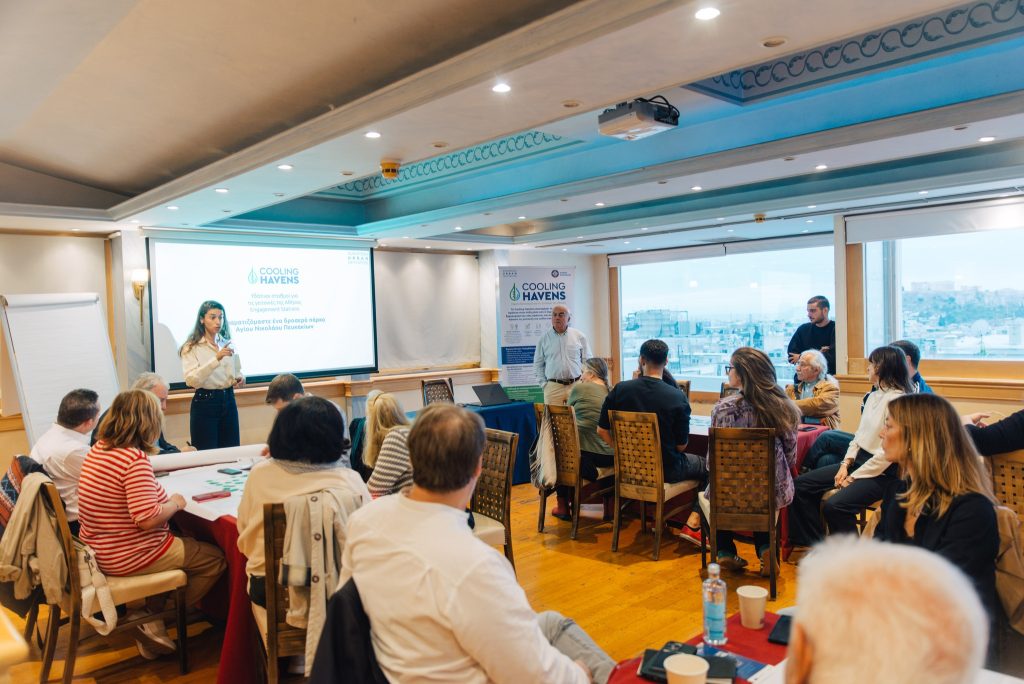
The increasing thermal stress in Athens and the growing pressure on public spaces make it necessary to adopt new approaches to urban design. The Cooling Havens project responds to this context by addressing the challenges of the climate crisis in a systematic and evidence-based manner, with a strong focus on creating cool, resilient, and functional public spaces. From its very beginning, the project has placed participatory processes at its core, recognizing that the sustainability and resilience of interventions are significantly strengthened when local communities are actively involved in the design process. Public consultations are not treated as a formal requirement, but as a key tool for understanding real needs, local characteristics, and everyday experiences connected to public space.
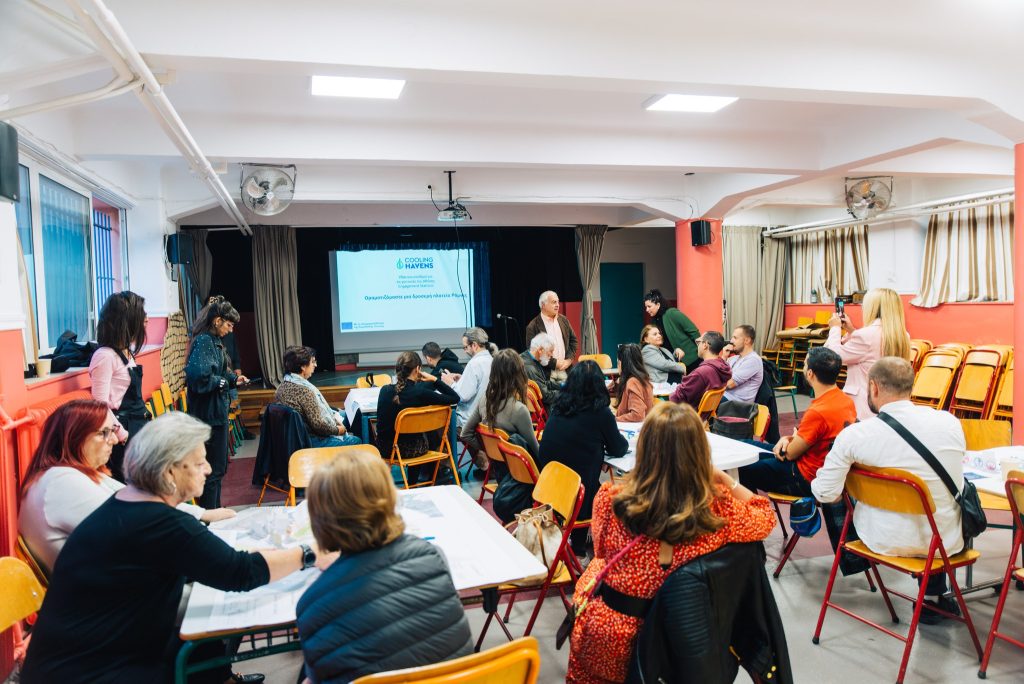
To date, public consultations have taken place in different areas of the city, including Ano Patissia, Neapoli Exarchia, Ramnes Square, and Laconia Square—locations with diverse characteristics, uses, and challenges. Despite these differences, common issues emerged across all areas: lack of shade, thermal stress, limited presence of greenery, and the need for improved water management within the urban fabric. At the same time, each consultation highlighted the distinct role each space plays in residents’ daily lives—whether as a meeting point, a leisure area, or a landmark of historical and social significance. Capturing these qualitative aspects is a critical part of the process, enriching the design with insights that cannot be derived solely from technical studies.
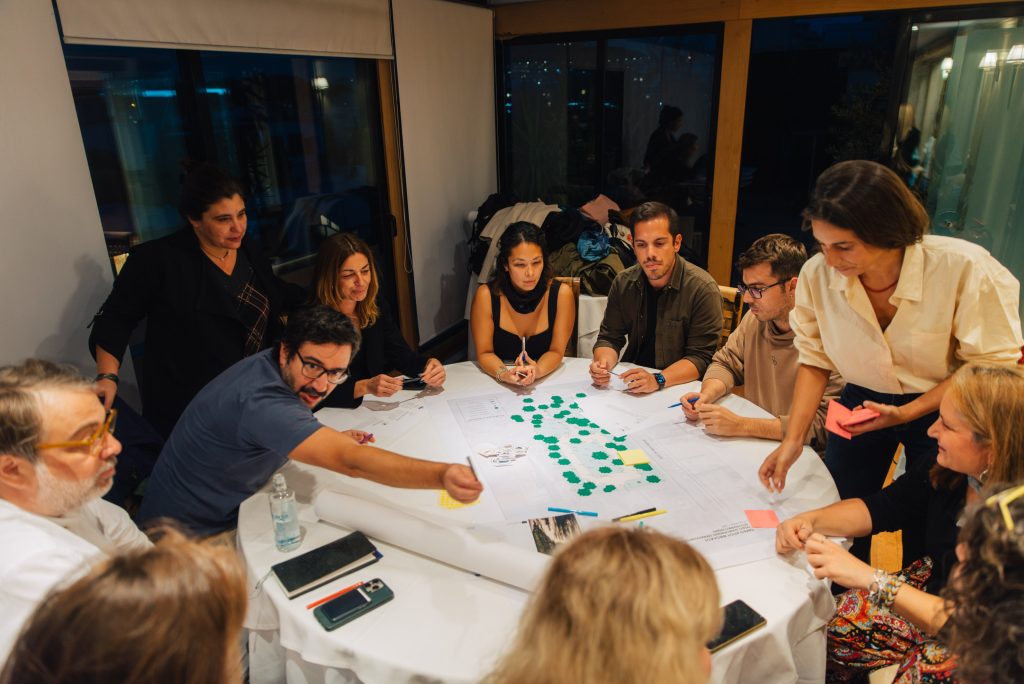
Within the consultation process, particular emphasis was placed on nature-based solutions and the strategic use of water as a means of cooling and ecological enhancement. Proposals such as rain gardens, bioswales, small water features, micro-forests, and biodiversity-enhancing interventions were presented and discussed not only as technical solutions, but as actions with a direct impact on quality of life, microclimate conditions, and the overall experience of public space. Through dialogue with participants, the importance of functionality, accessibility, and safety was highlighted, along with the need for interventions to serve different age groups and patterns of use. This process contributed to the gradual maturation of the proposals and improved their adaptation to the real conditions of each area.
One of the most significant outcomes of Cooling Havens to date is the active engagement of local communities and the strengthening of a shared sense of responsibility for public space. Residents, local stakeholders, civil society representatives, professionals, and municipal services have all played a meaningful role in the process, reaffirming that public space is a common good and a field of collaboration. While consultations are ongoing and the design process remains dynamic and open to new input, the results so far clearly demonstrate that a participatory approach enhances the quality, sustainability, and long-term value of urban interventions. Cooling Havens continues its journey with the aim of translating collective knowledge and lived experience into interventions that will contribute decisively to a cooler and more resilient Athens.