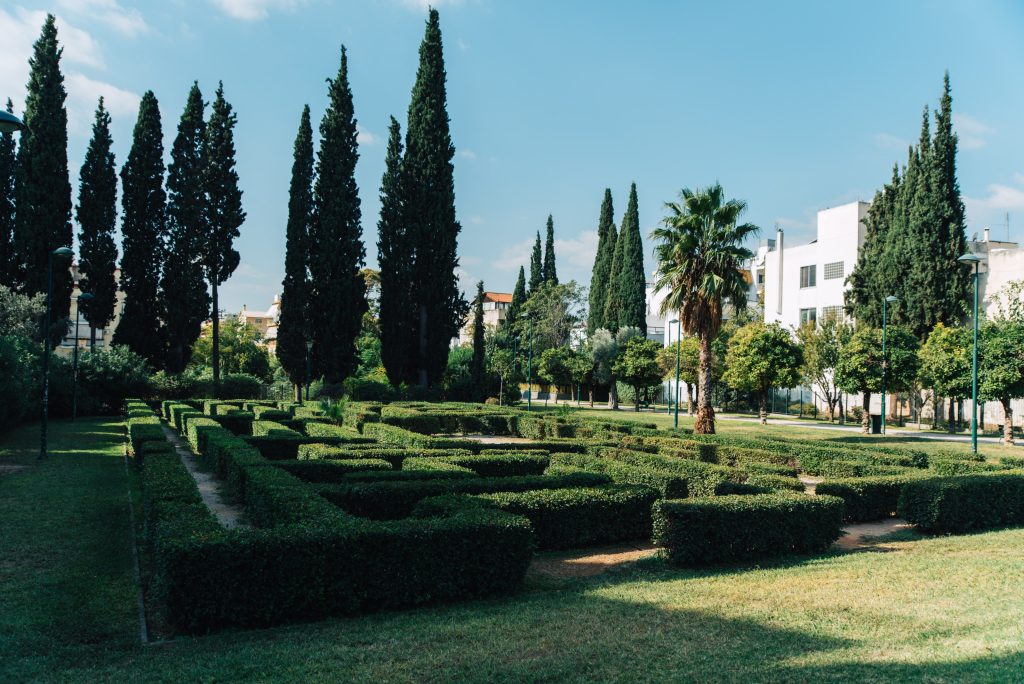


A Sustainable Urban Development Model to Address the Climate Crisis
Athens is facing the severe impacts of the climate crisis. Intense summer heat, sudden flooding events, and the near absence of water elements in public space place increasing strain on residents’ everyday lives.
Decades of unplanned urban development have turned the city into an environment dominated by extensive impermeable surfaces that trap heat and prevent water from naturally replenishing the urban aquifer. In this context, the Cooling Havens project proposes an innovative response: the creation of neighborhood-based cooling and participation points, placing water at the center. These are not merely technical interventions, but a new approach that connects urban sustainability with social cohesion and environmental education.
Cooling Havens as a Response to the Climate Crisis
Athens is ranked among the most vulnerable European cities to extreme heat phenomena. Temperatures frequently exceeding 40°C, combined with limited green and water elements, create an inhospitable environment—particularly for vulnerable groups. Cooling Havens aims to establish places that relieve excessive heat and improve the neighborhood microclimate.
Interventions include the installation of blue–green infrastructure such as rainwater harvesting systems, biofilters, and spaces where water functions as a key element of urban regeneration. Water reuse through innovative technologies provides sustainable solutions for water management, reducing reliance on potable water and strengthening resilience to flooding. The focus extends beyond immediate heat protection to the long-term creation of a more resilient urban fabric.
Alignment with the Sustainable Development Goals (SDGs)
Cooling Havens aligns with the global sustainability agenda and key UN Sustainable Development Goals, highlighting its holistic character.
SDG 11 – Sustainable Cities and Communities
A sustainable city is not only greener, but also fairer. The project upgrades underserved neighborhoods, transforming them into accessible spaces for recreation, cooling, and learning. Spatial inequalities are reduced as residents gain access to quality infrastructure. Integrating water into public space becomes a marker of sustainable urban design—linked to resilience, social cohesion, and everyday life.
SDG 13 – Climate Action
The project contributes to climate action on two levels: it creates nature-based adaptation mechanisms for overheating and flooding, reducing risks to health and safety, and it functions as a living innovation lab, demonstrating how cities can plan long-term solutions rather than rely on emergency measures. Resilience shifts from theory to visible, neighborhood-scale practice.
SDG 6 – Clean Water and Sanitation
Water management is at the heart of the project. Technologies such as rainwater harvesting and sewer mining provide alternative sources for irrigation and infrastructure maintenance, reducing dependence on potable water and fostering a culture of responsible water use. Integrating these practices into urban design paves the way for a circular water-use model that can inspire other cities.
SDG 4 – Quality Education
Through the Athens Water School, students, educators, and citizens engage in activities that combine science, culture, and experiential learning. Workshops, digital tools, and educational materials build environmental awareness from an early age, directly linking knowledge with the lived experience of the city.
SDG 8 – Decent Work and Economic Growth
Sustainable transitions require a strong social dimension. Via the Green Jobs Training Program, the project offers vulnerable groups training in maintaining green and blue infrastructure. These new skills enhance employability, social inclusion, and the local economy—turning sustainability into tangible opportunities.
SDG 17 – Partnerships for the Goals
Cooling Havens operationalizes the Quadruple Helix model, bringing together the Municipality of Athens, universities, research centers, private actors, and civil society organizations. This collaboration ensures interdisciplinarity, social acceptance, and a strong European dimension, enabling knowledge exchange and scalability.
A Catalyst for Urban Regeneration and Development
Cooling Havens goes beyond technical interventions to act as a catalyst for Athens’ urban regeneration. Neglected public spaces gain new life as green, water-rich cooling areas, improving microclimate, strengthening social cohesion, and creating new opportunities for public life and interaction. Climate challenges thus become drivers of creative regeneration and development.
Innovation Rooted in Collaboration
Innovation in Cooling Havens lies not only in infrastructure, but in the integration of nature-based solutions with social participation. Water becomes a catalyst for sustainable change, creating neighborhood hubs of cooling, learning, and culture.
Implementation relies on broad partnerships—including the Municipality of Athens, Develop Athens, National Technical University of Athens, EYDAP, and many other public and private stakeholders. This collaboration secures long-term impact: the Municipality has committed to covering maintenance costs through the public budget, while the model can expand across Athens and be transferred to European cities such as Budapest and Sofia, which participate as project partners.
Cooling Havens represents an integrated model of sustainable urban development—bringing together environmental, social, and economic dimensions and restoring water as a vital element of public space. It creates neighborhoods that are more resilient, more equitable, and more participatory, fully aligned with the vision of the Sustainable Development Goals. In a city challenged by the climate crisis, the project points the way toward a renewed relationship with water, the environment, and urban life—one that can serve as a model for Greece and Europe alike.