


Mid-Term Event Copenhagen (21–22 April 2026)
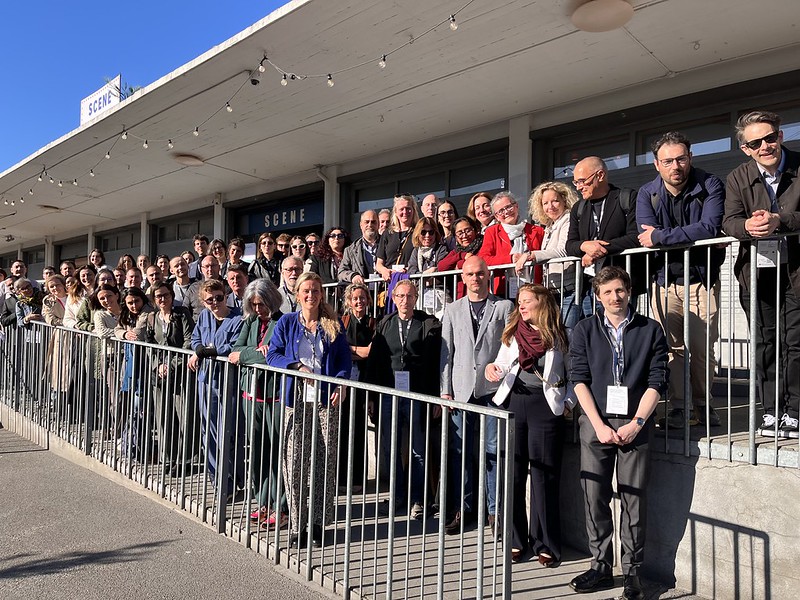
The European Urban Initiative (EUI) Mid-Term Event for Call 2 projects took place in Copenhagen on 21–22 April 2026, with the aim of reviewing implementation progress to date, enabling experience-sharing among participating cities, and strengthening cooperation between partners. The event was hosted at H15 MAD & KULTUR i KØDBYEN, in an area that reflects the contemporary urban regeneration of the Danish capital.
The first day began with participant registration and a welcome session, followed by an introductory plenary session and networking activities among project representatives. This was followed by thematic workshops focusing on three main policy areas: Sustainable Tourism, Harnessing Talent in Shrinking Cities and Greening Cities. The Greening Cities session was split into two parallel groups, highlighting both the high number of participants and the importance of urban resilience and climate adaptation actions within the EUI framework.
A central feature of the thematic workshops was the presentation of project posters, through which cities shared their experience one year after implementation started. Rather than serving as formal progress reporting, the posters functioned as a knowledge-exchange tool and a starting point for discussion among participants. The focus was placed on the approaches being tested, the difficulties encountered, the successes already recorded, and the first lessons learned from the implementation of innovative interventions.
Within the Greening Cities session, the poster of Cooling Havens was presented, focusing on bringing water back as a functional element of the city and on fostering a new culture of urban water management. The project is built on the premise that blue and green infrastructures can help restore a natural balance within the urban fabric – contributing to reduced thermal stress, wiser management of rainwater, and strengthened urban biodiversity.
The project presentation outlined implementation progress to date: starting from the need to restore the city’s natural water cycle and evolving into the testing of pilot Cooling Havens – i.e. points that combine nature-based solutions, sustainable water management, and urban resilience interventions. At the same time, it was pinpointed that the project’s greatest value does not lie only in the technical solutions being applied, but primarily in the ability to transfer the methodology to other cities and settings. Cooling Havens links sustainable water management with digital innovation, climate adaptation, reducing trapped heat in dense urban areas and strengthening social resilience through participatory processes and co-design.
Particular interest was also drawn to the difficulties and challenges highlighted during implementation. These included shifts in political priorities, institutional and administrative obstacles, as well as the way public debate can move from broader environmental benefits to more local, everyday issues raised by residents. It was further noted that maintaining the project’s coherence under changing political and administrative conditions is a critical success factor for implementation and the long-term sustainability of interventions.
During the afternoon session of Day 1, interactive group discussions took place around four key issues of project management: the implementation of transfer activities, knowledge capitalization and dissemination in collaboration with experts, management of project partnerships, and active engagement of communities and stakeholders. Participants were able to join two different rounds of discussions, exchanging experience, challenges and practical solutions related to implementation in their cities.
The discussions highlighted both the value of know-how exchange among EUI projects and the need for more effective collaboration mechanisms between local authorities, technical partners and local communities. Particular emphasis was placed on participatory planning processes, the difficulty of sustaining citizen engagement in long-term projects, and the need for better communication of the environmental and social benefits of interventions.
Day 2 of the Mid-Term Event focused on a site visit to Nordhavn (North Harbour) -one of the most ambitious examples of contemporary urban development and sustainable planning in Northern Europe. Formerly an industrial port zone, the area is gradually being transformed into a sustainable waterfront neighborhood, with an emphasis on environmental performance, sustainable mobility, participatory development and the integration of tourism activity into the urban fabric.
The visit was directly linked to the CULTIGEN Call 2 project, which focuses on sustainable tourism through digital tools, participatory processes and data-driven approaches. Participants had the opportunity to explore the project’s methodology hands-on through a series of interactive stops and workshops.
Overall, the EUI Call 2 Mid-Term Event proved to be a highly useful platform for experience-sharing, strengthening transnational cooperation and reflecting on the challenges and opportunities of innovation projects implemented in European cities. The thematic discussions, project presentations and the Copenhagen field visit highlighted the importance of integrated, participatory and experimental approaches for addressing complex urban challenges, such as climate adaptation, sustainable resource management, social cohesion and sustainable tourism.