


When Participation Becomes Infrastructure
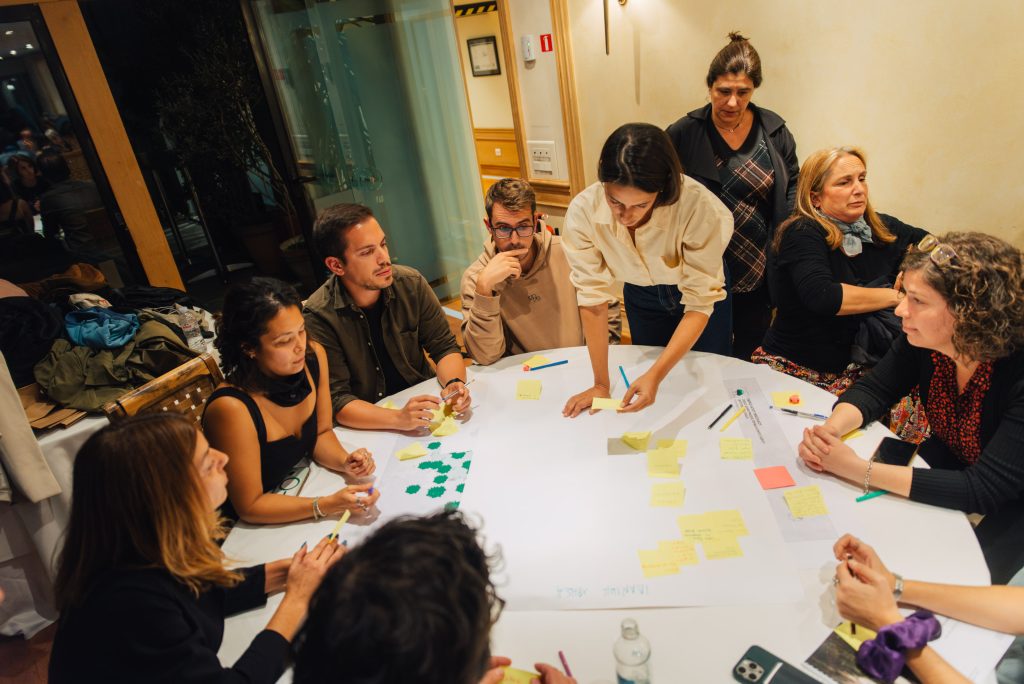
Within the Cooling Havens project, citizen participation is not treated as just another consultation phase; it is considered a core planning infrastructure. In a city increasingly challenged by the urban heat island effect, understanding the everyday experiences of residents is not simply complementary information—it is a critical tool for informed decision-making.
The discussion around stakeholder engagement has evolved significantly in recent years, though not always in a meaningful way. Too often, participation remains limited to formal consultation processes that are disconnected from the social and spatial realities in which solutions are ultimately implemented. In practice, this often means that the same voices continue to dominate the conversation, while valuable forms of local knowledge remain unheard.
The experience of Impact Hub Athens demonstrates that participation can function differently—not as a standalone phase of a project, but as a continuous process of knowledge generation, risk prevention, and trust-building. Like any infrastructure, meaningful participation requires careful design, methodology, and ongoing attention in order to function effectively.
Mapping plays a central role in this process. Not only as a technical tool, but as a practice that helps identify stakeholders beyond the “usual suspects.” Through participatory mapping activities, invisible or underrepresented stakeholders can be brought into the conversation, while valuable insights emerge regarding how residents experience public space: which places feel cooler or less welcoming, how people move through the city, and where they perceive challenges or opportunities.
In Cooling Havens, this knowledge is actively integrated into the project. Through workshops, field walks, and open discussions, residents contribute to a collective understanding of the urban microclimate and help identify locations that can serve as future “cooling havens.” Their experiences directly inform the design of interventions, from site selection to the characteristics of the proposed solutions.
This approach did not emerge by chance. It builds on broader experience in participatory design processes, such as the transformation of Kypseli Municipal Market. There, a historic building in the heart of a multicultural neighbourhood was reimagined as a platform for social innovation through a process that actively incorporated the voices of the local community. Under the management of Impact Hub Athens, the Market was revitalised as a vibrant hub connecting residents, creators, businesses, and community groups.
The key lesson from such initiatives is clear: when stakeholder perspectives are not merely recorded but genuinely integrated into planning processes and reflected in final decisions, participation becomes shared responsibility. Participants themselves become informal stewards of the quality, relevance, and long-term sustainability of interventions.
At the same time, the integration of digital tools—such as those increasingly used within initiatives linked to the New European Bauhaus—can broaden participation and improve accessibility. However, digital engagement should complement rather than replace the value of physical presence and local experience. Technology serves as an enabler, not an end in itself.
At a time marked by multiple challenges, from climate change to growing social inequalities, the need for meaningful participation has become even more urgent. Stakeholder engagement can no longer remain superficial or procedural. Instead, it must be redefined as a fundamental infrastructure for democratic innovation.
The experience of Cooling Havens demonstrates that when participation is carefully designed and embedded throughout every stage of a project, it can lead to interventions that are more effective, equitable, and resilient. When mapping, place-based engagement, and dialogue work together, they create a framework in which solutions are not imposed but co-created—and therefore stand a far greater chance of enduring over time.
The Impact Hub Athens Team