


Sofia at a Glance
Situated at the foot of Vitosha Mountain, Sofia has been a vital city ever since the Thracian and Roman age and an important European center between the East and West. The historic legacy, ranging from the Late Antiquity remains in the heart of the city to Neoclassical and Socialist Modernism buildings, is blended with new architecture featuring the 21st century trends
Sofia is the capital city, economic and cultural heart of Bulgaria and a dynamic IT industry and tech startups hub in Southeast Europe. It is the most populous city in the country with 1.2 million inhabitants and is still growing. However, the densification and expansion of the built-up area tends to leave less place for nature within the living environment of citizens and thus the continuing urban growth is posing environmental challenges, exacerbated by the warming trends of climate change.
Local Climate Vulnerabilities in Sofia
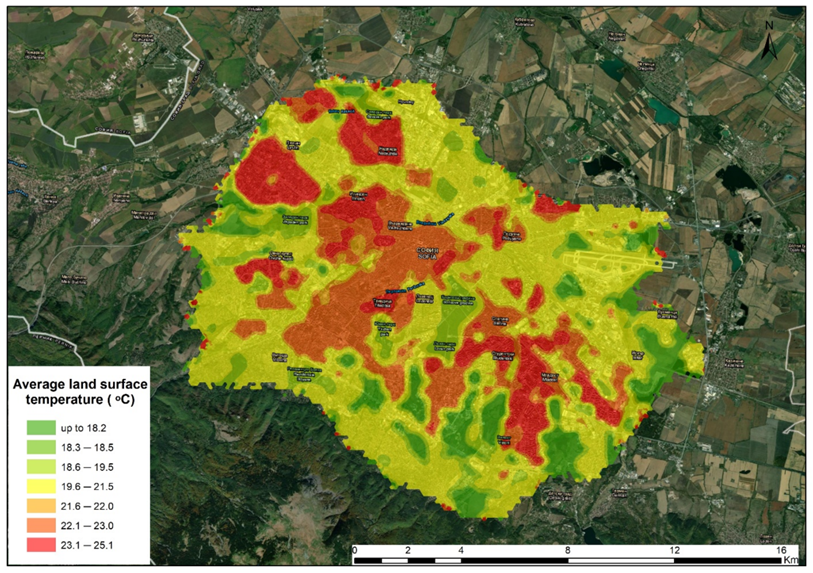
One of the critical issues Sofia is increasingly facing is the urban heat island (UHI) effect. During summer months sealed soil, concrete buildings and asphalt surfaces in the center and several densely populated residential neighborhoods trap heat which causes significantly higher temperatures there than in the outskirts. This effect is pronounced during evening and night hours, with areas of the city experiencing significant periods of tropical nights with temperatures not falling below 20℃, much like in Mediterranean cities. This is a new phenomenon in Sofia’s meteorological registry. The escalating thermal stress poses severe health risks to vulnerable groups of inhabitants, particularly the elderly and children, while rapid temperature swings in spring and early summer increasingly destabilize individuals with cardiovascular and chronic conditions and negatively impact public health altogether.
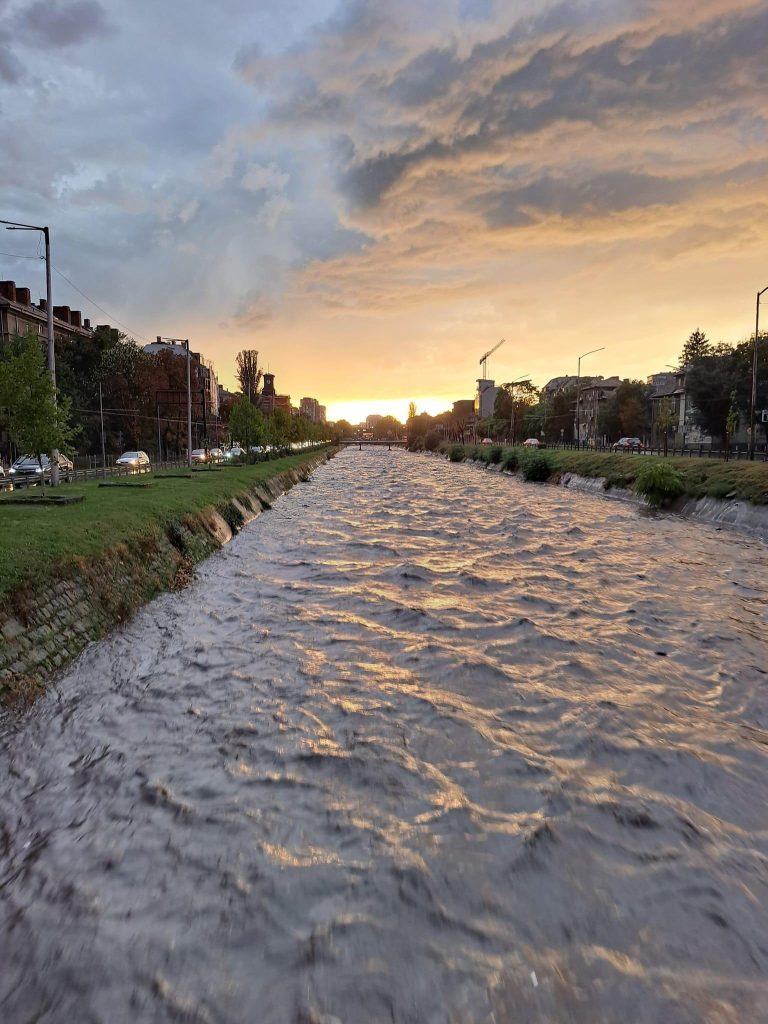
Another critical challenge facing modern Sofia is the rising risk of severe pluvial flooding. Sofia streams run steeply from the 2290 m high Vitosha mountain. During high-intensity rainfall events, becoming more frequent lately, these normally tiny brooks suddenly become fast rivers while the city’s aging and predominantly combined sewer network is rapidly overloaded by excessive stormwater and causes localized street floodings. For the municipal administration, this transforms a seasonal weather event into a serious environmental management issue, as polluted runoff escapes into urban water bodies, further aggravating a long-standing infrastructural strain under increasingly volatile climate conditions.
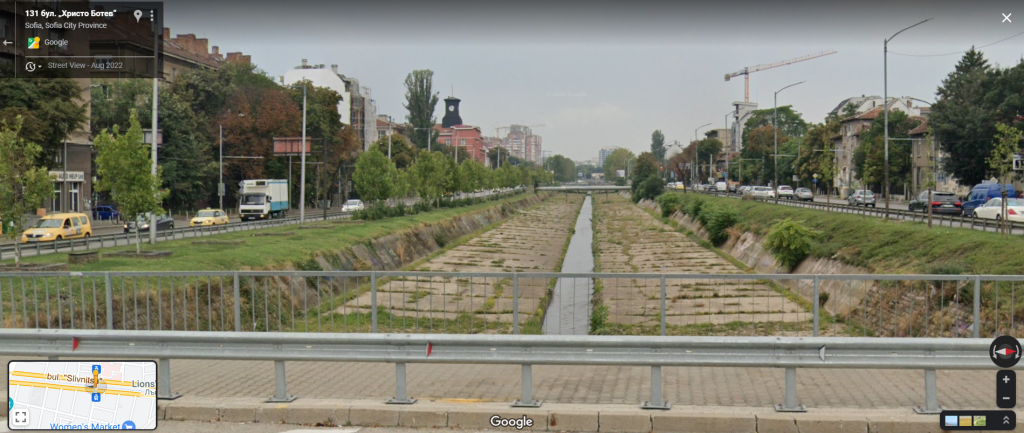
A third interconnected challenge for Sofia is urban drought and moisture depletion, driven by extensive soil sealing and the historic degradation of its natural river network. Aggressive real estate development has replaced permeable landscapes with concrete and pushed many mountain streams into underground pipes or artificial channels. This extensive soil sealing creates an impervious barrier that blocks rainwater infiltration, preventing surface water from recharging groundwater systems. Instead of sustaining the local environment, stormwater is immediately evacuated through the drainage network, leaving the urban core artificially dry. Consequently, while Sofia possesses a well-developed central park system, access to cooling infrastructure remains highly unequal, leaving newly built residential areas devoid of accessible “blue” and “green” spaces. During summer heatwaves, this man-made water deficit depletes soil moisture and severely reduces the city’s capacity for evaporative cooling, a vulnerability further magnified by a prominent need for behavioral change. Unlike residents of warmer Southern European cities, Sofia’s citizens remain less familiar with adapting daily routines to extreme heat, with daytime schooling, outdoor labor, and recreation continuing unaltered during peak temperatures. Although the municipal administration is only beginning to recognize the climate value of these blue-green corridors, substantive actions toward restoring riverbeds or reversing soil sealing remain absent from current infrastructure agendas. This gap underscores the urgent need for initiatives like the COOLING HAVENS project to demonstrate how localized interventions can restore moisture retention and compensate for Sofia’s lost natural functions.
Why EUI Cooling Havens Matters to Sofia
For Sofia Municipality, the EUI COOLING HAVENS project serves as a critical feasibility and learning platform at a time when the city is still evaluating its definitive climate implementation strategy. By actively analyzing Athens’ three innovation pillars, Sofia’s technical departments can determine exactly how decentralized sewer mining, targeted de-paving methodologies, and participatory awareness campaigns can be tailored to its own infrastructure. Participating in this transfer process allows Sofia to build vital institutional capacity and leverage advanced design data from leading expert partners to address its urgent local needs. Ultimately, this exchange matters because it provides the municipality with a validated roadmap to transform its theoretical plans—such as the linear “Green Ring” and pocket parks—into concrete, socially integrated blue-green solutions capable of mitigating intense urban heat and restoring lost river functions.
Inspiration from Athens
The peer exchange in Athens highlighted that implementing innovative blue-green infrastructure requires breaking down institutional silos within Sofia Municipality, moving away from fragmented departmental operations toward integrated cross-sectoral planning. In terms of public activation, the exchange provided critical lessons on shifting community engagement away from complex engineering jargon toward communicating the tangible, localized comfort and microclimatic benefits of the interventions. While Sofia contributed its own structured, multi-staged community engagement framework—progressing from individual dialogues to broader focus groups—the transfer process offered valuable strategies for managing public discourse, specifically on how to redirect unrelated civic grievances, such as parking disputes, to relevant municipal branches in order to maintain a strict focus on biodiversity and climate adaptation goals.
Technologically, the evaluation of Athens’ modular sewer-mining system demonstrated deep relevance for mitigating Sofia’s seasonal summer droughts and systemic water scarcity. Regarding digital monitoring tools, the exchange reinforced that the long-term viability of decentralized blue-green solutions depends on precise sensor recalibration and the establishment of robust historical data baselines. Generating open data and clear empirical evidence of microclimatic improvements is essential for providing decision-makers with the justification needed for large-scale green infrastructure investments. Ultimately, the transfer process underlines that successful knowledge exchange is not based on blind replication, but on a strategic “translation” of Athenian innovations tailored directly to Sofia’s specific hydrology, soil sealed landscapes, and local urban culture.