


Two-day knowledge exchange on nature-based solutions in Athens (21–22 January 2026)
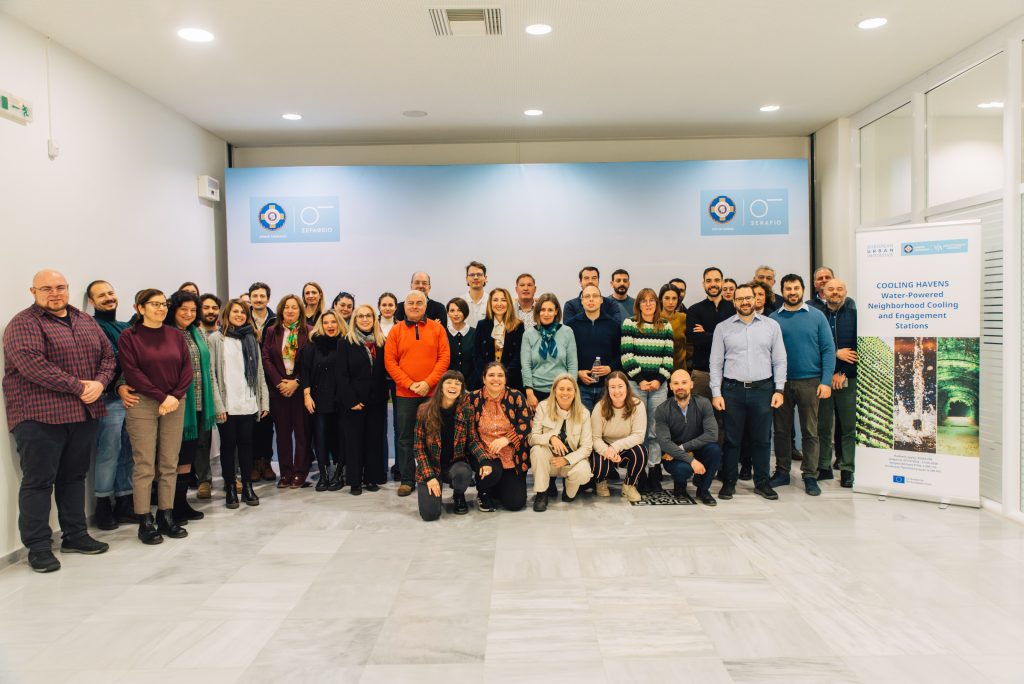
The two-day working meeting of the European Urban Initiative project Cooling Havens concluded on a positive note, with meaningful discussions and practical takeaways. The project is implemented by the Municipality of Athens as Lead Partner and aims to promote nature-based solutions for cooling and flood protection, making smart use of water and green infrastructure, strengthening the city’s ability to work with nature, fostering a new culture of collaboration, and supporting participatory planning grounded in scientific evidence.
The two-day meeting took place in Athens on 21 and 22 January 2026 and included:
a structured programme featuring discussion, hands-on workshop work and practical tools, and site visits to the areas where the project interventions are being implemented.
All Greek project partners attended, along with the three knowledge transfer cities (transfer partners):
- Municipality of Roeselare (Belgium),
- Budapest 18th District Municipality (Hungary),
- Municipality of Sofia (Bulgaria).
The sessions were hosted at the Serafio City of Athens – a standard-setting Centre for Green Innovation and Resilience operated by Develop Athens S.A.
The objective of the exchange was for the three transfer cities to gain resources, know-how and tools from the implementation of the project in the Municipality of Athens – particularly on nature-based solutions – so they can promote or adapt similar practices in their own cities.
The meeting was further strengthened by the presence of the European Urban Initiative (EUI) representatives: the Project Officer Mr Romain Turminel, Transfer Expert Ms Sandra Marin and Innovative Action Expert Ms Eleni Feleki.
From the Municipality of Athens, participants included (among others) Mr Nikos Chrysogelos, Appointed Municipal Councilor for the Climate Pact and Social Economy; Ms Grammatiki Papazoglou, Director of Strategic Planning, Resilience, Innovation and Documentation; representatives of the Municipality’s Technical Services; as well as the Project Management & Coordination Team.
During the meeting, all partners highlighted how important it is that the Municipality of Athens was selected – among a large number of applicants – to receive European funding (80%) for implementing this project in the city, based on a strong application file and solid documentation.
Representatives of the three transfer cities spoke very positively about the experience and the know-how gained during the two-day meeting, as well as about the project itself. Similar working meetings will follow in the three cities.
Day 1 (21/1): Innovative solutions – Community – Data
The first day focused on the “core” of Cooling Havens: how nature-based solutions and interventions supporting cooling and flood protection form an integrated model that combines public-space interventions, community activation through systematic consultation and participatory planning, and documentation through scientific, environmental and digital data.
Following opening remarks and brief partner introductions, participants reviewed the innovative solutions by intervention site, focusing on what can be applied – after suitable adaptation – to the context of the three transfer cities, considering their different climatic, environmental, urban and social characteristics. At the heart of the discussion was the smart use of water in the city as a tool for cooling and resilience, properly integrated into public space design – including, where relevant, the use of reclaimed water and rainwater, always with safe practices and respect for the environment.
In the session on community activation and information, awareness and education actions, the presentation by Impact Hub Athens – together with an overview of the participatory planning models used in the project – was followed by a substantial discussion and constructive input from EUI representatives and the participating cities. The discussion addressed how target communities are engaged, which consultation structures work best, what methodology is followed and how it can be applied in other social contexts; as well as how a shared vision is shaped and how trust-based dialogue can lead to co-design and a sense of local community “ownership” of the interventions.
In the same context, reference was also made to the action “Water Memory Narratives-Storytelling & Testimonies” (implemented under the coordination of partner DIPYLON), which strengthens the link between technical solutions and citizens’ everyday lived experience by drawing on memories from the past and connecting them with contemporary scientific and ecological approaches.
The day concluded with the theme of Data and Technology: the role of IoT sensors and the use of open data for systematic monitoring of intervention performance. The National Technical University of Athens (NTUA) delivered the relevant presentation, highlighting the importance of evidence for evaluation and continuous improvement.
Day 2 (22/1): Focus on Transfer Partners & Transfer Activities – Marketplace, timeline, reflection and site visits
The second day focused on the processes and mechanism of knowledge transfer between organisations and cities. In the morning, the three transfer cities presented their profiles, challenges and learning goals, confirming a shared need: more resilient, greener, nature-based and cooler public spaces where nature-based solutions, community participation and data work together in a coherent way.
A key part of the day was the “Give-and-Take sessions (Marketplace format)”. Participants were divided into groups and rotated through three thematic stations:
(a) Nature-based solutions
(b) Community activation/engagement
(c) Data and sensors
The Q&A with the relevant partners was captured in practical notes on worksheets, recording solutions, suggestions and opportunities for implementation.
Next, the process was presented and followed by an interactive timeline development exercise. With creative facilitation by Impact Hub Athens and Alchemia Nova, participants carried out exercises mapping the key groups and people who will influence the progress of their initiatives, clarifying “who to engage, how and when”, as well as the project’s common target focus.
The final sessions allowed each partner to share key conclusions and future priorities, confirming the constructive spirit of cooperation and shared direction.
At the end of the sessions, site visits took place at two intervention locations. Participants reviewed the proposed interventions on the ground, guided by the relevant partners: EYDAP and the architectural offices Ecoscapes and Ensphere, connecting the nature-based solutions model with the real-life conditions of public space.
The two-day meeting highlighted the importance of Cooling Havens for Athens and Europe. The workshop-based methodology, meaningful knowledge exchange and the link between presentations, tools and on-site experience created a solid foundation for next steps—towards public spaces that are cooler, more resilient and more welcoming for everyone.